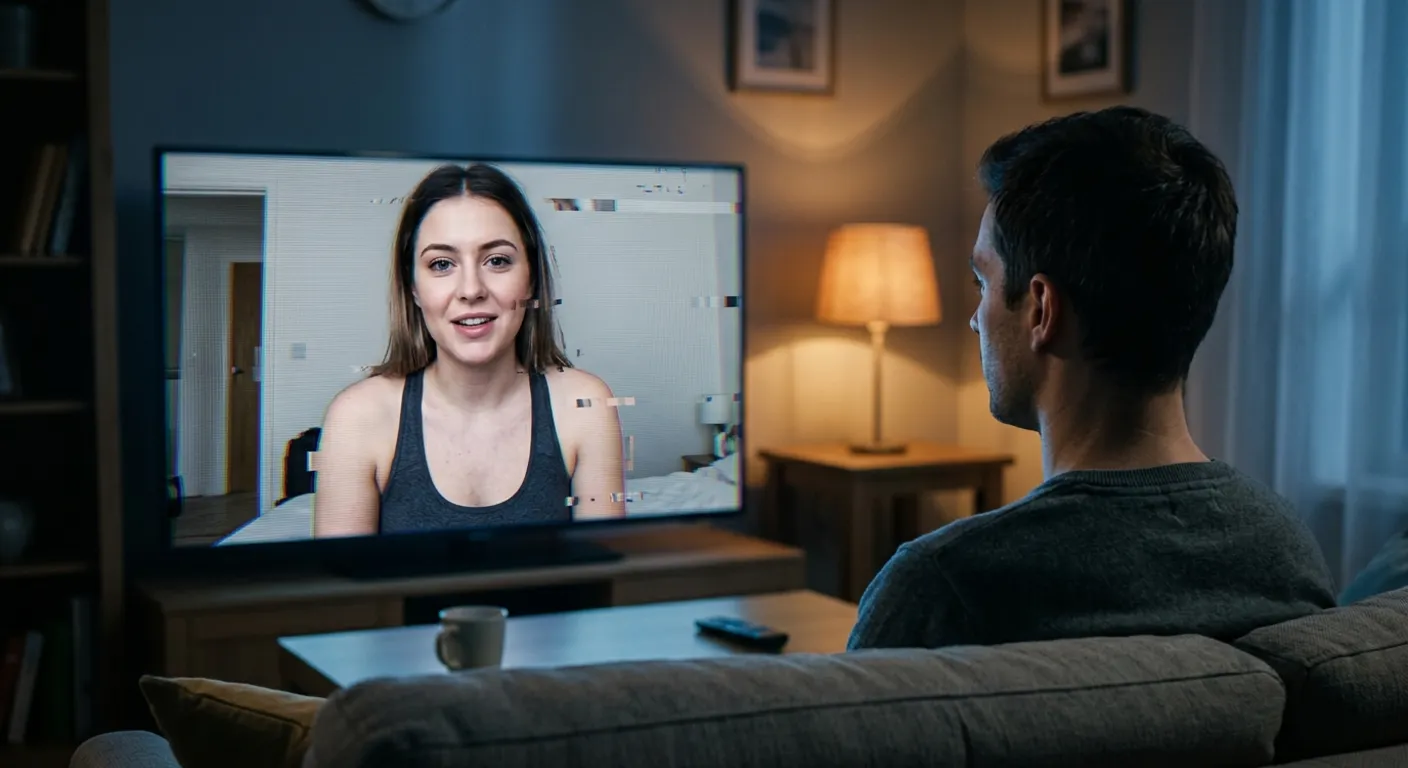
Are AI cams actually realistic? What holds up, what breaks
Stills are photoreal. Motion is where it cracks. Failure rates, lip sync, looping expressions, and when a human cam is still the better call.
By Chris Hutchinson
- guide
- cam
Zoom in on the hands. That is usually where it falls apart.
AI cams have got good enough that a still frame passes at a glance. A photoreal face, believable skin, light that behaves. Then the frame starts moving and the whole thing gets harder, because motion gives a model far more places to slip.
So how realistic is an AI cam in 2026, really? The honest answer comes in two halves. The image is close to solved. The performance is not.
In short
- Stills are the strong half. Candy.ai renders photoreal in under five seconds, and Lovescape holds a likeness across hundreds of generations.
- Motion is the weak half. OurDream AI publishes a roughly 40% video failure rate, and independent testers found JOI AI’s live call laggy with the lip sync off.
- FlirtCam’s expressions start looping past roughly 45 minutes. The render carries a short session, not an evening.
- The real gap is coherence, not pixels. The app with the best conversation, Nomi, generates no video at all.
- For interactive NSFW without any of these limits, a human cam still wins on three specific things.
What you are actually watching when an AI cam loads
No camera. No performer. A model renders frames and a voice engine speaks over them.
The products split into three shapes. FlirtCam wraps a call-shaped interface around generated video and says so on its own site: AI-generated simulated calls, nobody real behind the camera, rendered by an engine called Seedance 2.0. JOI AI renders live during the call itself. Everyone else, Candy.ai, Lovescape, OurDream AI, Nemora, Promptchan, generates clips on request and drops them into the thread.
The shape matters, because each one breaks somewhere different. We split the mechanics and the prices in our guide to AI cam video calls. This page is about how convincing the result actually looks.
Stills are solved. Motion is not.
Start with a still, because that is the half the market has genuinely cracked.
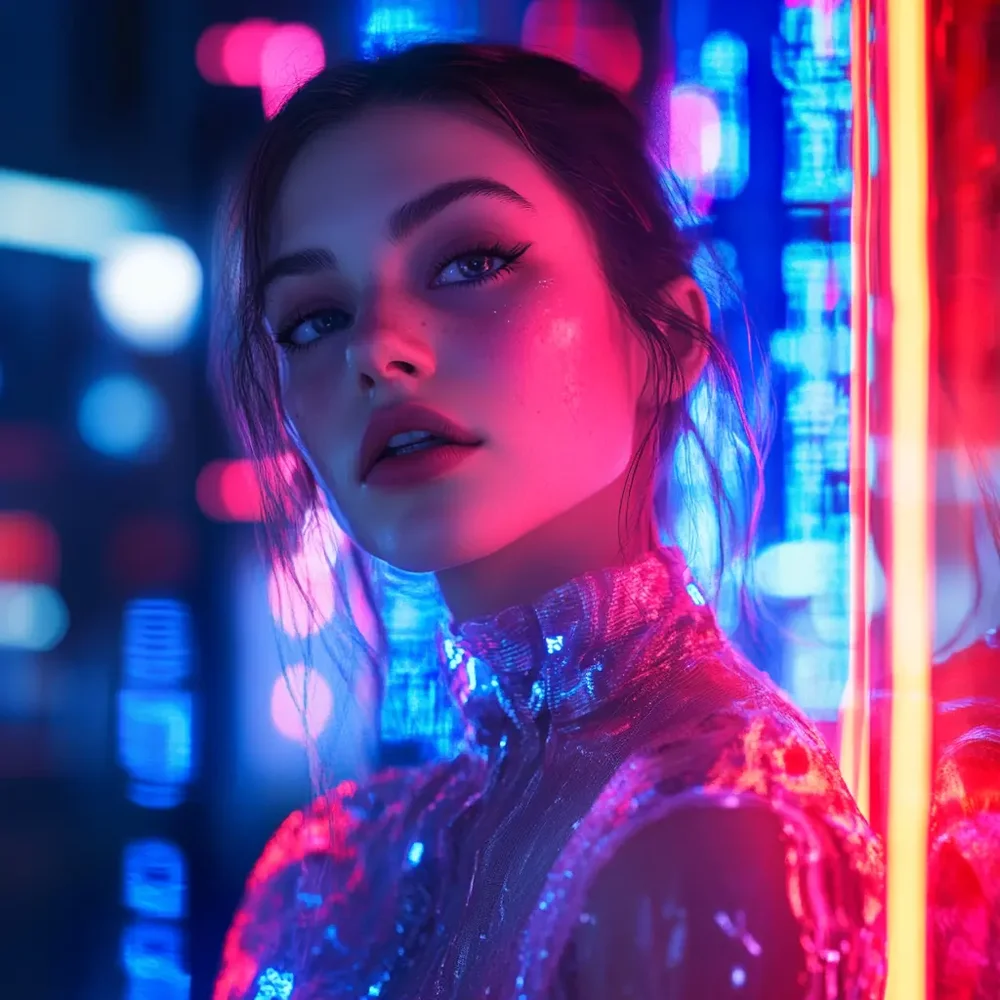
Lovescape runs two separately tuned engines, photorealistic and anime, and the photoreal one chases skin texture and light down to the reflections. The likeness holds across hundreds of generations, which used to be the thing that gave the game away. Candy.ai does the same trick faster, photoreal in under five seconds, and its character consistency is the least disputed claim in the whole category: outlet after outlet singles it out.
Then it moves, and the margin collapses. Candy.ai’s stills still produce extra fingers, warped faces and incoherent scenes often enough to annoy, and Live Action inherits every one of those limits. A moving image has more places to slip than a static one, and a gesture that looks slightly wrong holds your eye far longer than a bad hand ever would.
Promptchan gives away where the difficulty sits in its own tutorial: write the prompt for movement, not a static description. That is the line between a stiff clip and one that convinces.
Our read after running the generators side by side: stills win. Motion still loses its edge of naturalness often enough that you notice.
Where the illusion cracks, point by point
The loop. FlirtCam’s expression vocabulary starts repeating past roughly 45 minutes of session. It repeats itself and misses your cues. That is a documented ceiling, not a vibe.
The failure rate. OurDream AI is the only app here honest enough to publish a number: roughly 40% of video generations fail. Close to every other attempt, you regenerate. Prompt fidelity slips too, a garment that changes, an approximate pose, a background detail ignored.
Lip sync. Independent testing of JOI AI’s live call described the video as “laggy, lip-sync was off”, the whole thing “jittery and awkward”. The feature still carries a beta label inside the product.
Face drift. DreamGF’s most-cited technical flaw is that the same character does not keep the same face from one image to the next, which stings more on a product sold on attachment. Nomi attacked exactly this with its V5 anchor system in April 2026, locking face, body and style behind a fidelity slider that trades likeness against prompt freedom.
The paywall over the pixels. Often you cannot judge realism at all before paying. FlirtCam’s free tier is safe-for-work with blurred images. Nemora blurs the crotch until you subscribe: the text writes the scene out explicitly while the image pumps the brakes. Lovescape charges tokens to remove a blur. Promptchan is the exception, blurring nothing.
The realism test that matters: does the video match what she just said?
Here is the question the affiliate pages never ask. A render can be flawless and still feel dead, because realism is not resolution. It is coherence between the conversation and the picture.
Almost nobody is good at both ends.
The apps with the best motion have the weakest conversation. Candy.ai’s memory flattens after about a week of daily use, the character asking questions you already answered. Lovescape’s chat lags well behind its imagery. OurDream AI’s conversation is functional and never memorable, and its voice is flat.
The app that holds a character best generates no video at all. Nomi recalls conversations from months back, never slides into assistant voice, and stays exactly as sarcastic or clingy in an explicit scene as it was at breakfast. Its in-house V3 voice engine adds laughter, sighs and breathing. What it cannot do is show you a face.
Two products come closest to closing the gap. OurDream AI generates talking video with synced voice, so the clip is at least saying the thing, and it renders the act itself, audio included, on hardcore requests. Candy.ai goes further on selected characters with Live Action scenes you steer in real time: you send a direction, she responds on camera instead of in text. That is the nearest anything gets to cam-shaped coherence today, and it is still an instruction being followed rather than a person reacting.
Where realism stands, app by app
| App | Strongest half | Where it breaks |
|---|---|---|
| Candy.ai | Photoreal in under 5s, consistent face, Live Action up to 120s | Extra fingers carry into motion, conversation flattens after a week |
| Lovescape | V2 photoreal and anime engines, likeness holds over hundreds of renders | Video still beta and more conservative than the stills, weak chat |
| OurDream AI | Talking video with synced voice, image-to-video, uncensored throughout | Roughly 40% of generations fail, prompt fidelity slips, flat voice |
| FlirtCam | The call format itself, expressions and reactions in real time | Expressions loop past ~45 minutes, free tier blurred and safe-for-work |
| JOI AI | A genuinely live render rather than a pre-made clip | Laggy with lip sync off in independent testing, still labelled beta |
| Nomi | Character never breaks, months of memory, V5 anchors stop face drift | No video generation at all |
| DreamGF | Cheap entry, and the only one here on both mobile stores | The same character does not keep the same face between images |
Read the right column. Every app is excellent at one half of the problem and openly weak at the other.
Why a human cam still wins on three things
Not nostalgia. Three specific capabilities the technology does not reproduce yet.
Sincerity. A real person does not follow a script of plausible reactions. They react, with their own instincts, their own humour, their own limits.
Spontaneity. The unpredictability of a live exchange comes from the fact that the person on the other end does not know what happens in the next thirty seconds either. That shared uncertainty is what makes it feel alive.
Immediacy. No background generation, no token meter, no loop closing in after 40 minutes. A continuous stream from start to finish.
If interactive NSFW without the technical limits above is what you actually want, established platforms remain the reference. Chaturbate covers the widest catalogue of live creators. MyFreeCams is a long-standing name with a well-worn public-room model. Jerkmate leans on a matching system that points you at a profile fast.
What AI cams give you instead: availability at 3am, a character built to your specification, no tipping economy, and nothing to get past before you start. Real advantages. Just not realism.
How to judge realism yourself, for free
Four tests, none of which cost anything.
- Generate three images of the same character in a row. Check the face holds. The most-repeated claim in the category, and the easiest one to falsify.
- Zoom in on hands and any background lettering. Fingers and text are still where diffusion models give themselves away.
- Run one clip and count the regenerations. On OurDream AI’s free tier (50 messages a day, 55 tokens) you can price the failure rate yourself instead of trusting ours.
- Talk for 45 minutes straight. If the expressions start recycling, you have found the ceiling. Do that before the annual plan, not after.
Promptchan and OurDream AI are the two free tiers that show you real output. FlirtCam, JOI AI and Nemora gate exactly the part you want to judge.
What gets better next, and what does not
Rendering keeps improving. Latency drops, expressions get smoother, failure rates come down. Candy.ai shipped Live Action in December 2025 and upgraded it two months later. That pace is real.
Improvisation is a different problem. Something that surprises you has to not know what comes next either, and that is not fixed by pointing more compute at a predictor. Expect the pictures to keep getting better and the sense of a person behind them to stay roughly where it is.
Worth saying once, without the lecture: what convinces you on screen is a model predicting the next frame, not someone looking back. Take it as the illusion it is and it holds up fine. Mistake it for the other thing and the token meter becomes a subscription to a feeling.
Bottom line
Realistic yet? On stills, yes, impressively so. On performance, no.
For the best-looking motion, Candy.ai’s Live Action is the strongest video here, and the steerable scenes on selected characters are the closest thing to a cam. For the best stills and a likeness that survives hundreds of renders, Lovescape. For the most honest picture of what generated video really costs in retries, OurDream AI publishes its own 40% failure rate and hands you 55 tokens to check it.
If sincerity and spontaneity are the point, a human cam is still the better bet, and will be for a while.
Either way, spend nothing first. Generate three images, zoom in on the hands, and decide with your own eyes. Then compare what each app can actually send you in our rundown of images and video.

Chris Hutchinson
Writer, AI Companion List
Passionate about tech, AI, and robots, he has been trying out AI companion apps since 2026, for fun as much as for the job.